Industrial PCs & Edge AI Computers for Environments That Break Standard Hardware
BITECH manufactures edge AI computers, fanless box PCs, and rugged panel PCs for deployments where standard hardware fails — on vehicles and mobile robots, in outdoor and roadside enclosures, on energy infrastructure, and on factory floors. Isolated I/O, wide-range DC power, fanless wide-temperature construction, and a 10-year lifecycle commitment, engineered and built in Shenzhen.
Most of our work starts with a deployment, not a part number. When no catalogue product fits, we engineer the board to your envelope — custom dimensions, I/O and BIOS — in 1–3 months, from 100 units
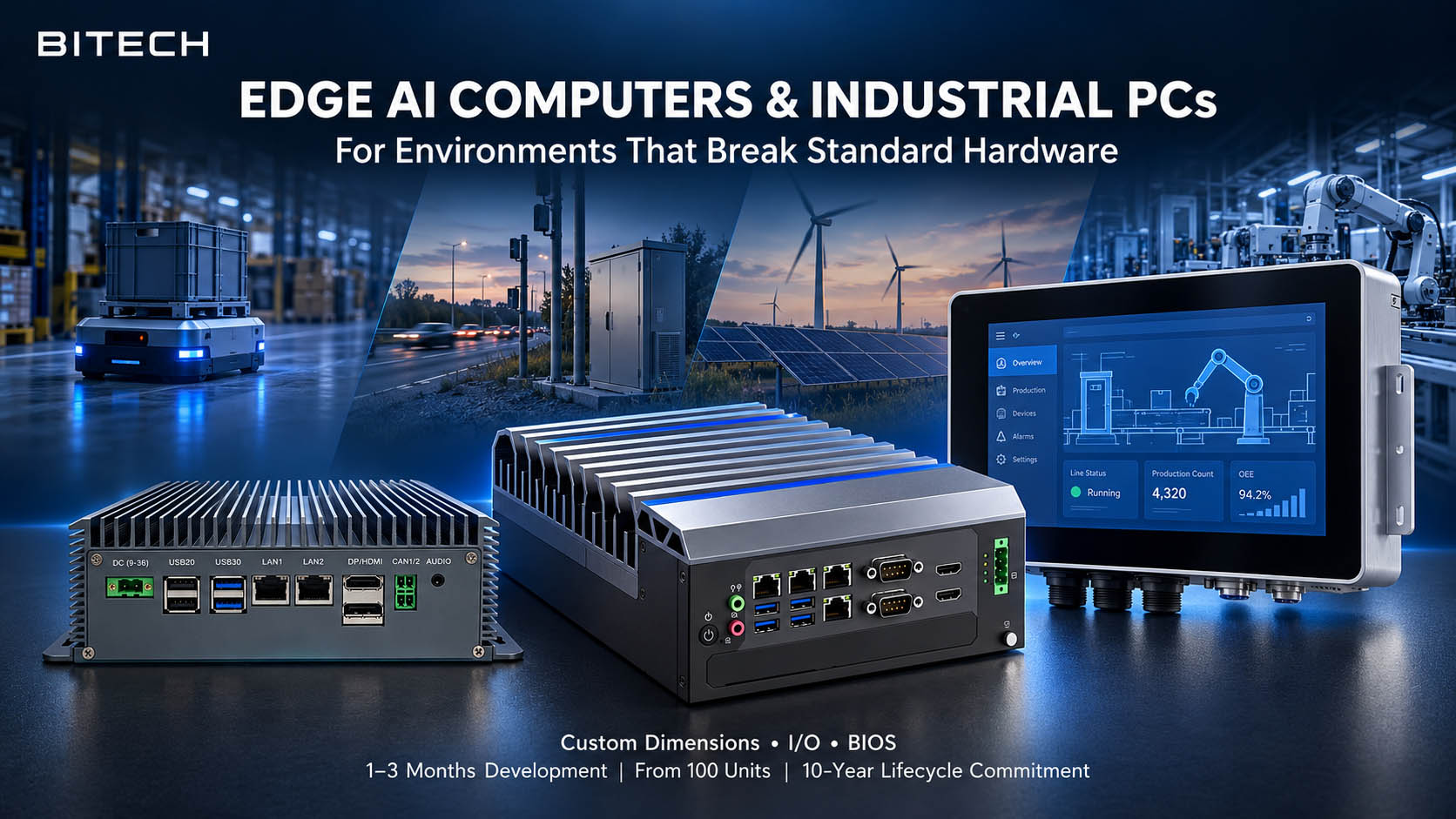
Hardware Platforms: Embedded Box PCs, Edge AI & Industrial Touch Panels
Three families, one engineering standard.
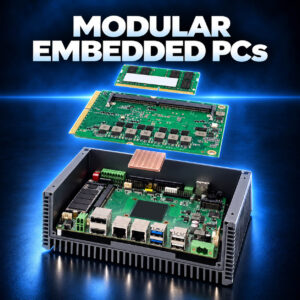
Modular embedded PCs
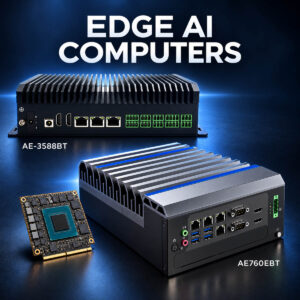
Industrial Edge AI computers
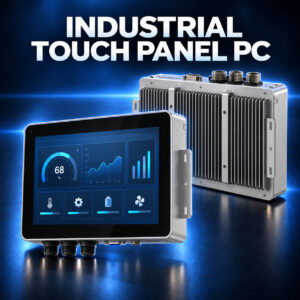
Rugged Industrial Panel PCs & HMI
Engineering Pillars
Industrial PC engineering: resilience & deterministic architecture
Three measurable criteria drive every design decision in our fanless industrial computers. Full technical depth lives in the linked whitepapers.
Modular SOM Architecture (AX Series)
Intel 4th–14th gen · one carrier board
Swap the compute module, keep the carrier board — a core feature of our AX series. Upgrade CPUs without mechanical redesign or re-certification, ensuring a guaranteed 7+ year supply footprint
4000V Galvanic Isolation Firewall
COM · CAN · DIO – AE series & ODM variants
An electrical firewall stops ground loops and surges at the interface — before they cascade into the core.
Native CAN bus, all speeds
4000 V isolation · 60 Ω integrity
Hardware-level CAN controller with deterministic timing — no USB bridges, no jitter, no reflection errors.
Modular Architecture
AX-230BT /234BT/660EBT platform
CARRIER BOARD
Engineering Access
Engineering Requests Most Industrial PC Vendors Decline
What you'd normally be told “no” to.
The requests that get declined elsewhere are the ones this company was built around. Four we hear most often — and what actually happens when you ask.
-
Mechanical Usually: no
Change the board dimensions to fit an enclosure we already tooled.
Custom-dimension mainboard, designed to your envelope.
1–3 months from requirements review to first articles.
-
Interfaces Usually: no
Add two isolated CAN ports and drop the serial ports we don’t use.
Carrier I/O respecified at PCB level.
Native controllers on the board — not adapted with dongles or USB bridges.
-
Volume Usually: no
We need 200 units, not 5,000.
Turnkey OEM from 100 units.
NRE quoted upfront, before you commit to anything.
-
Supply Usually: no
Keep this exact BOM available for eight years.
BOM lock under formal PCN.
Last-time-buy notice issued before any component change.
An engineer, not a sales desk, replies within 48 hours.
100% Two-Stage Burn-In Testing — 18h + 18h
Failures belong in our factory, not in your field deployment.
Every BITECH industrial computer undergoes a two-stage burn-in process before shipment: 18 hours at motherboard level plus full interface verification, then 18 hours after final assembly. This process is applied to 100% of production units, not statistical samples, with test records linked to each unit’s serial number.
18-Hour Industrial Motherboard Burn-In Test
Board-Level Validation Before Assembly
Before the motherboard enters final assembly, it runs continuously under load for 18 hours. The test verifies CPU stability under sustained load, DDR memory stability, SSD / storage operation, power delivery and voltage stability, thermal behavior of CPU, VRM and memory, LAN, USB, COM, CAN and other onboard interfaces, plus watchdog, RTC and BIOS functions.
18-Hour Complete Industrial PC Burn-In Test
Final-System Validation After Assembly
After the motherboard is installed in the fanless enclosure, the complete industrial PC undergoes another 18-hour burn-in test. This second-stage test verifies sustained CPU and memory load, SSD read/write operation, complete-system temperature monitoring, power stability, final I/O verification, fanless thermal performance inside the enclosure, and automatic power-on and watchdog functions where configured. Only units that complete the full validation process are released for shipment.
Industrial computing case studies
Deployed, measured, still running.
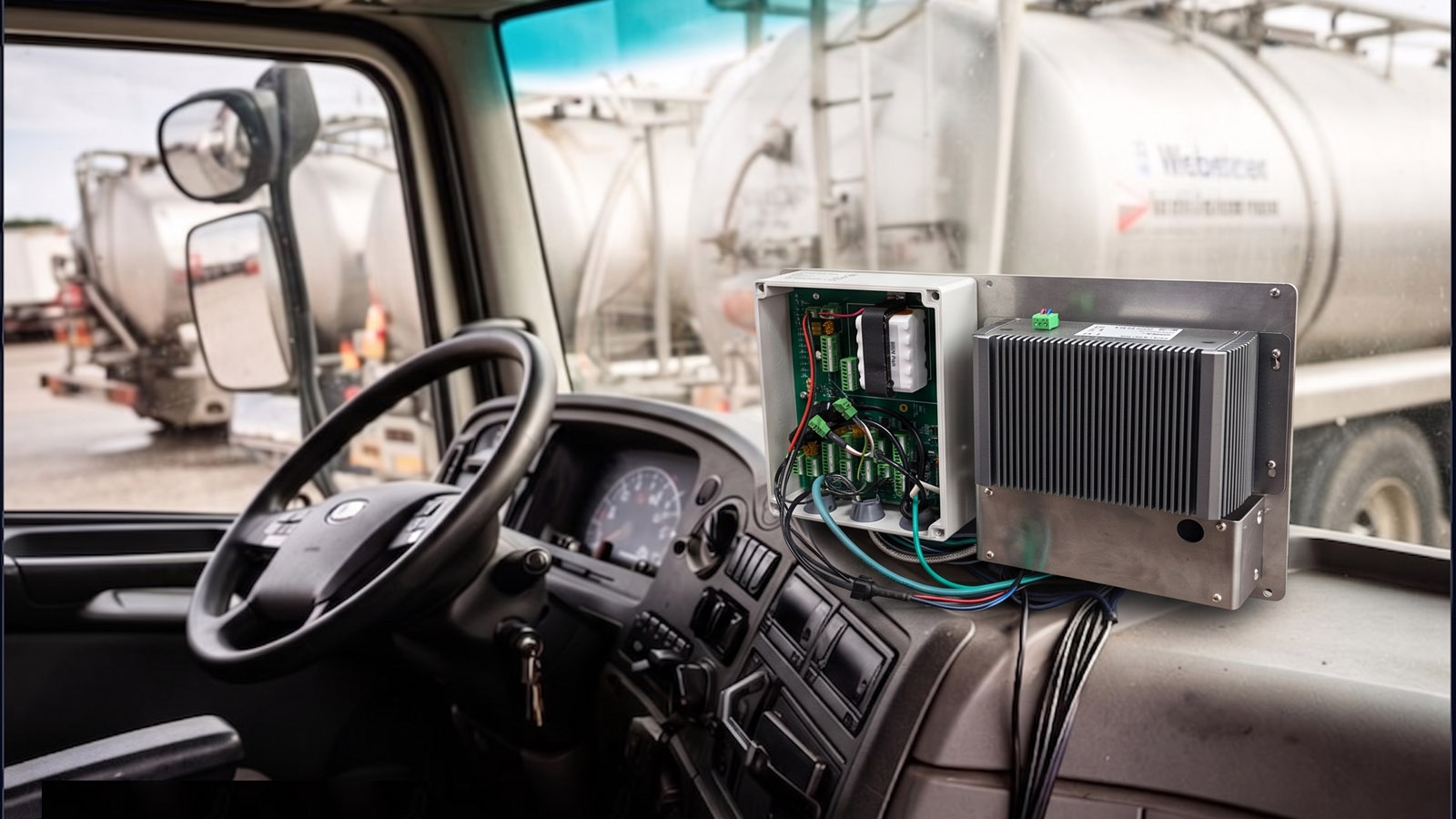
Ruggedizing vehicle-mounted fleet computing in Denmark
AX-234BT industrial motherboards deployed as the central control unit in milk transport and waste management trucks — surviving dirty power, EMI, and continuous vibration with 9–36V input, 4000V isolated CAN bus, and burn-in QC.
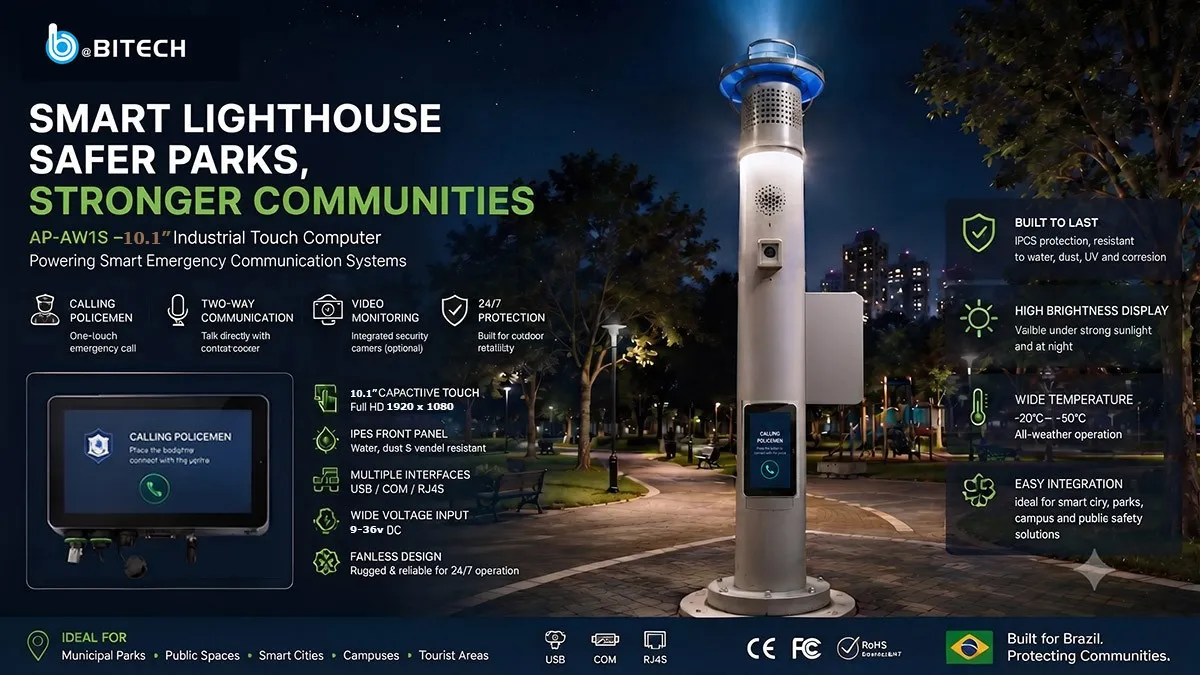
Custom 10.1″ IP65 panel PC for municipal gardens
AP-AW1S outdoor alarm and monitoring terminal, engineered with IP65 sealing, aviation locking connectors, and fanless construction for 50+ municipal garden deployments.
Tailored to Your Architecture: BITECH OEM/ODM Services
When standard industrial PCs limit your application, BITECH delivers exact-fit hardware engineering — from minor branding to full-scale, ground-up development.
Deep ODM Engineering
Full-Scale CustomizationOff-the-shelf form factors and I/O layouts should never dictate your software’s potential. If our standard catalog doesn’t fit your blueprint, we build what does.
Bespoke Motherboard Design
We engineer custom-dimension mainboards from scratch, embedding the exact I/O density (such as isolated CAN, RS232/485, or specific PCIe/M.2 expansions) your project demands.
Thermal Management & Mechanical Architecture
Our team designs custom rugged enclosures and runs thermal simulations to optimize heat dissipation, ensuring stable performance for high-power processors in space-constrained or harsh environments.
Kernel-Level BIOS & Firmware Customization
We develop tailored BIOS/Firmware to support specific boot sequences, optimized watchdog timers, hardware-level security, and specialized OS kernel integration (including custom Ubuntu/Debian BSPs).
Turnkey OEM Configuration
Rapid Branding & ConfigurationAccelerate your time-to-market with deployment-ready hardware that carries your brand’s authority.
Private Labeling & Chassis Branding
Professional silk-screening, laser-engraved logos, custom chassis colors, and branded packaging designed to align seamlessly with your corporate identity.
Agile Hardware & I/O Configuration
Tailored I/O panel modifications, pre-installed memory/storage matrixes, and optimized default BIOS settings, allowing the hardware to be drop-shipped directly to your end-users.
Requirements review
Engineer-led feasibility review with a solution proposal within 48 hours.
Sample & validation
Standard platforms sampled in 10 days; custom carrier boards in 4 weeks.
Pilot run
Small-batch production with full test reports and serial-number traceability.
Mass production
Volume manufacturing with a 10-year supply commitment and ECO risk management.
Engineering Insights
Selection answers, before you send an RFQ
Technical deep-dives into edge AI deployment, x86/ARM computing architecture, and industrial validation — organised around the questions buyers actually ask.
Platform selection
Jetson Orin, RK3588 or x86 for my edge AI build?
Jetson Orin vs RK3588 vs x86 — a framework beyond TOPS: toolchain, power, thermal, I/O and lifecycle.
GPU form factor
MXM module or desktop GPU in an edge AI computer?
MXM vs Desktop GPU for Edge AI Computers — thermal path, power, upgradeability and lifecycle compared.
MXM validation
My MXM GPU fits the slot — will it actually work?
Power, BIOS/VBIOS, cold plate and thermal validation: why a module that fits is not yet compatible.
Cooling
Air cooling or liquid cooling for edge AI?
Sustained heat and airflow, and when the heat path matters more than the GPU.
Local LLM
How much VRAM does a local LLM actually need?
8GB vs 16GB vs 24GB — KV cache, quantization and MXM GPU sizing.
Machine vision
Smart camera or industrial AI PC for my inspection line?
Which architecture fits — GPU workstation, synchronisation, PLC and MES integration.
Vision sizing
How do I size an industrial PC for multi-camera vision?
Camera count is not a sizing spec — size the whole data path, from imaging and bandwidth to decode, inference and sustained thermals.
Entry-level CPU
When is the Intel N150 not enough?
N150 vs Core i5 for industrial use — memory, multitasking, machine vision and 24/7 workloads.
Do I need one?
Industrial PC or a commercial mini PC — what am I paying for?
Thermal, Windows, supply consistency and the real cost math, including when a mini PC is the right answer.
Start a project
Tell us the deployment, not the part number
Send us the environment, what each line connects to, and what has already failed with your current hardware. An engineer — not a sales desk — replies within 2 business days with a preliminary assessment.
- Standard model pricing, custom board design, or a full OEM programme
- NRE quoted upfront, before you commit to anything
- NDA signed before you share detailed specifications
Prefer email? sales@bitechipc.com · WhatsApp +86 135 3816 4607
Engineering FAQs
Questions engineers ask before they specify
Lead times, isolation ratings, lifecycle, BSPs and deployment limits — answered without the marketing layer.
What is the typical sample lead time?
It depends on the level of customization:
- Standard platforms (AE and AP series) — samples ship within 10 days.
- Custom carrier board — approximately 4 weeks to sample and validate.
- Fully custom mainboard designed to your mechanical envelope — 1–3 months from requirements review to first articles.
Is there an MOQ for OEM or private-label programs?
Yes. Turnkey OEM and private-label programs start at a minimum order quantity of 100 units. Non-recurring engineering costs are quoted upfront, before you commit — so budgeting for bespoke I/O, enclosure and BIOS requirements is transparent from the start.
Do you provide schematic review and integration support?
Yes. Our application engineers provide integration support including 3D STEP models for mechanical fit, Linux BSPs and SDKs, and schematic reviews for customized carrier board designs — so the hardware integrates cleanly into your architecture rather than being handed over at the box.
How do you support a 10-year lifecycle for industrial PCs?
Through strict bill of materials control and a modular System-on-Module architecture. Decoupling the compute module from the carrier board lets us manage component obsolescence proactively: when a component reaches end of life, we provide a pin-compatible upgrade path, so you avoid a full mechanical redesign or re-certification.
Changes are handled under formal PCN with last-time-buy notice issued before anything moves.
What operating systems and BSPs do you support?
Kernel-level support and custom Board Support Packages for Ubuntu, Debian and RT-Linux, alongside Windows 10 / 11 IoT Enterprise compatibility on x86 platforms. Our BSPs include documented APIs for native CAN, GPIO and watchdog timer integration.
One constraint worth knowing early: Arm platforms such as RK3588 run Linux or Android only — if your application requires Windows, the x86 platforms are the path.
How do your fanless computers manage heat in extreme environments?
Through passive cooling engineered per platform. Custom extruded aluminium chassis act as the heatsink, combined with controlled thermal pad placement and thermal simulation during mechanical design.
Systems operate reliably from −40 °C to +60 °C, with selected platforms rated to +80 °C. Because there are no fans, there are no vents to admit dust and no bearings to fail.
What quality assurance tests are performed before shipment?
Every production unit passes a two-stage validation process: 18 hours at motherboard level followed by another 18 hours after final assembly.
Products are compliant with CE, FCC, RoHS and UKCA, and are tested to MIL-STD-810G methods for shock and vibration for mobile and heavy-industrial deployments.
How do your systems handle ground loops and interface integrity?
Isolated platforms provide galvanic isolation rated to 4000 V withstand on COM, DIO and CAN interfaces — an electrical firewall that stops ground loops and field surges at the interface, before they cascade into the core.
For motion and fieldbus systems we use native hardware CAN / CAN FD controllers with deterministic timing, rather than software-emulated USB bridges, so bus timing stays predictable under load.
Isolation is specified per deployment rather than fixed on every model: a motor-drive network or vehicle bus gets it; a clean cabinet install on a unified ground doesn't need to pay for it.
Can your computers be deployed on vehicles or outdoors?
Yes — both are core deployments for us, not exceptions.
Vehicles and mobile equipment: wide-range 9–36 V DC input with ignition control, low-voltage cutoff to prevent battery drain when parked, and transient protection tested to ISO 7637-2 and ISO 16750-2, together with 4000 V isolated CAN and RS-485 for the vehicle bus.
Outdoor and roadside: sealed enclosures rated IP65 and above, fanless wide-temperature construction, and aviation (circular locking) connectors where standard ports would compromise the seal.
Do I actually need an industrial PC for this?
Not always. If the deployment is a clean, climate-controlled cabinet on conditioned power, with no fieldbus and easy physical access, a commercial machine is often the correct engineering call — and we will tell you so.
The premium on industrial hardware buys thermal design without a fan, a power input that tolerates a factory, isolated fieldbus, and a BOM that doesn't change silently. Whether that's worth paying for depends on your environment and your cost of downtime.
We wrote up where the line is, including the four cases where a mini pc win →
Question not answered here? Ask our engineering team →